


Heritage - Forts And Palaces
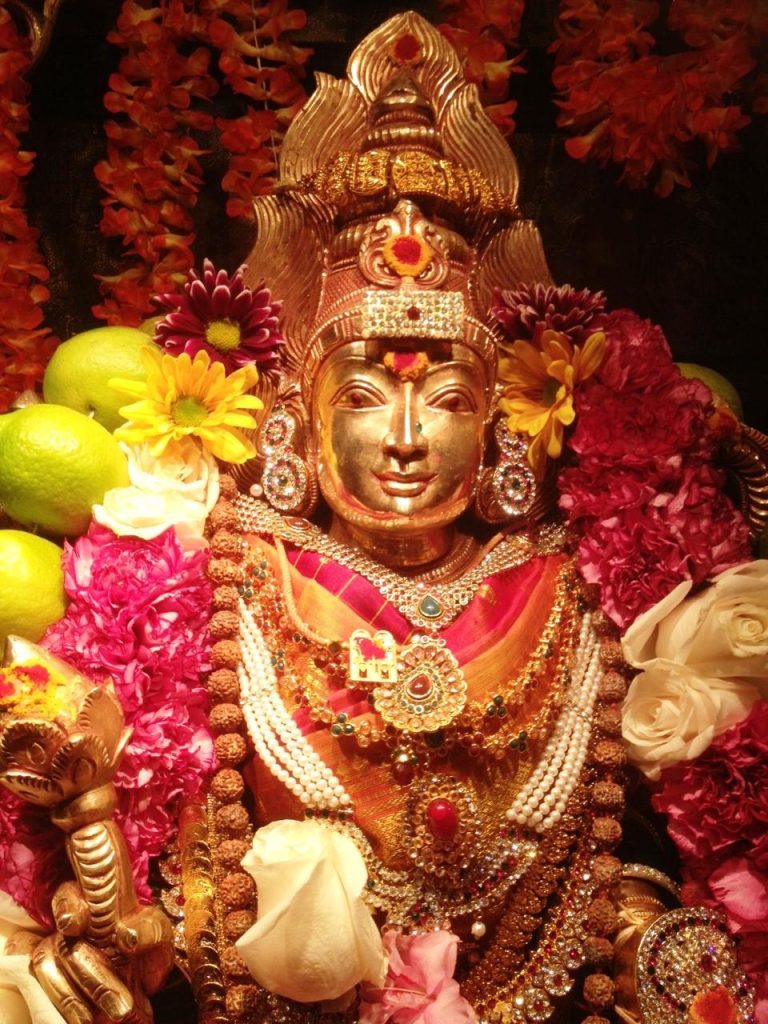
Forts And Palaces
Forts and palaces stand as timeless reminders of India’s glorious past, reflecting the power, pride, and vision of its rulers. Forts were primarily built for protection and military strength, often located on hilltops, near coastlines, or along important trade routes. Their massive walls, watchtowers, gates, and bastions reveal advanced engineering and strategic planning. Many forts witnessed historic battles and important royal events, making them living symbols of courage, governance, and resilience.
Palaces, on the other hand, were designed to display royal luxury, artistic excellence, and cultural richness. They feature grand halls, royal chambers, courtyards, intricate carvings, murals, and beautifully designed gardens. These palaces reflect the lifestyle of kings and queens and showcase a blend of regional, Mughal, Dravidian, and European architectural styles. Today, forts and palaces attract travelers from across the world, offering a fascinating journey into history, art, and heritage, while preserving India’s cultural identity for future generations.
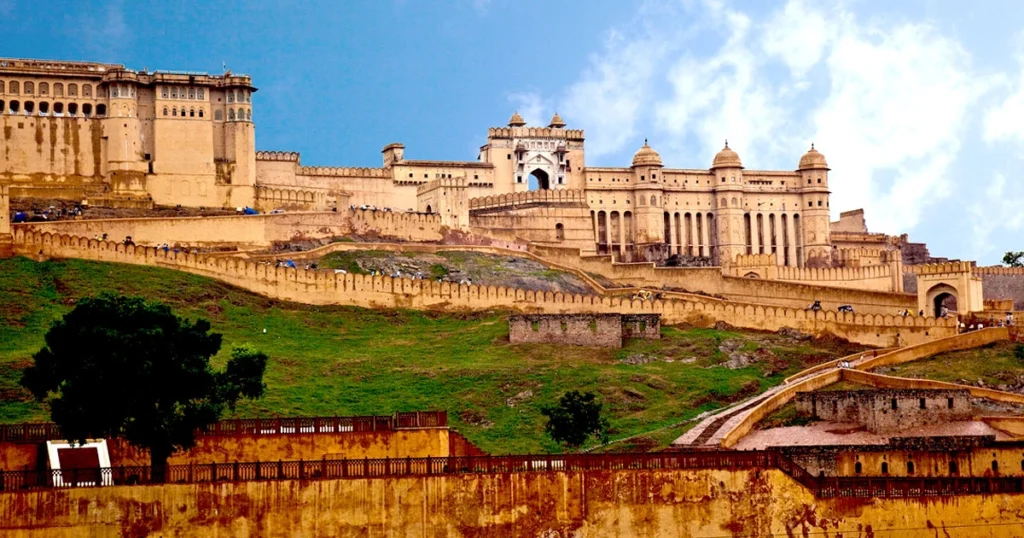
Amber fort
Amber Fort, also known as Amer Fort, is one of Rajasthan’s most iconic heritage marvels, located just outside Jaipur. Built in the 16th century by Raja Man Singh, this majestic fort stands atop a rugged hill and is famous for its grand Rajput architecture, ornate gateways, and panoramic views of Maota Lake. Inside the fort, visitors can explore stunning palaces such as the Sheesh Mahal (Mirror Palace), Diwan-i-Aam, Diwan-i-Khas, and the beautiful Sukh Niwas, where ancient cooling techniques kept the royal chambers pleasant. The fort’s delicate mirror work, frescoes, lattice windows, and royal courtyards give a magical glimpse into the opulence of Rajasthan’s royal era.
Travellers can reach the fort through a scenic uphill walk, jeep ride, or traditional elephant ride, making the experience even more memorable. In the evening, the Sound & Light Show narrates the rich history of Amber with dramatic lighting and music. Surrounded by rugged hills, serene lake views, and vibrant bazaars, Amber Fort offers a perfect blend of history, architecture, and royal charm—making it a must-visit destination in Jaipur.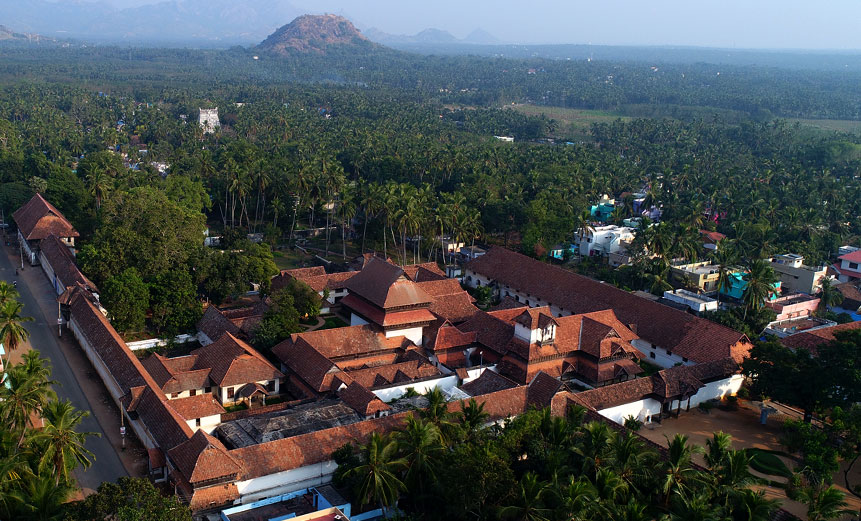
Padmanabhapuram palace
Padmanabhapuram Palace, located near Thuckalay in Tamil Nadu (close to Kanyakumari), is one of the finest surviving wooden palaces in India. Built in the 16th century by the Travancore rulers, it served as the royal capital before the kingdom shifted to Thiruvananthapuram. The entire palace complex is made of high-quality teakwood, rosewood, and granite, showcasing exceptional Kerala-style traditional architecture. Its famous Mantrasala (Council Chamber) is beautifully designed with intricate wooden ceilings and polished black floors made of a unique mixture of egg white, lime, charcoal, and coconut shells. The Thaikkottaram (Mother’s Palace) features elegant carved pillars and a central inner courtyard called Nalukettu. The Nataksala (Performance Hall) has detailed murals and lattice windows that reflect the artistic skills of ancient artisans. The palace also contains antique furniture, Chinese jars, Belgian mirrors, and royal artifacts that illustrate the luxurious lifestyle of the Travancore kings. Its long, cool passages, sloping tiled roofs, and wooden carvings give a peaceful and historic atmosphere. The Upparikka Malika, a 3-storey sacred structure, houses the royal family’s idols and prayer rooms, symbolizing the palace’s religious significance. Today, Padmanabhapuram Palace stands as a rare example of fully preserved traditional Kerala palace architecture and attracts visitors for its beauty, craftsmanship, and royal heritage.r.
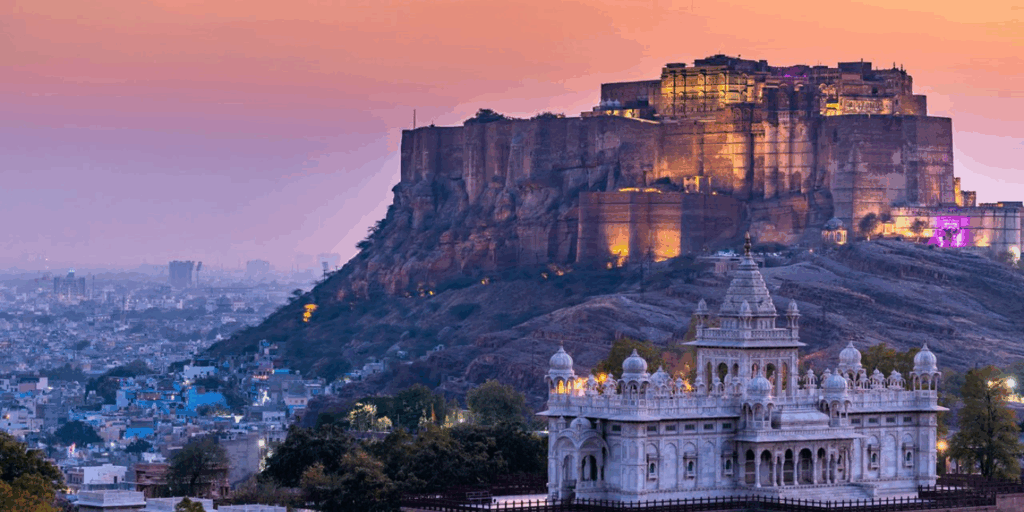
Mehrangarh Fort, jodhpur
Mehrangarh Fort, located in Jodhpur, Rajasthan, is one of the largest and most majestic forts in India. Built by Rao Jodha, the founder of Jodhpur, in 1459, the fort sits atop a rocky hill called Bhawana Hill, rising about 410 feet above the city. Its massive walls, some of which are 120 feet high and 70 feet thick, make it look powerful and almost impossible to conquer. The fort offers a breathtaking view of Jodhpur, famously known as the Blue City because of its many blue-painted houses. Inside the fort, there are several beautiful palaces and courtyards, each known for intricate carvings and grand architecture. The Sheesh Mahal (Mirror Palace), Phool Mahal (Flower Palace), and Moti Mahal (Pearl Palace) are among the most famous. The fort also houses a museum displaying royal weapons, costumes, paintings, palanquins, and historical artifacts, giving visitors a glimpse into Rajasthan’s rich royal history. Mehrangarh Fort is also known for its seven massive gates, each with historical importance. For example, one gate still bears marks from cannonballs fired during battles. The fort is closely connected with Rajasthan’s culture and hosts events like the Rajasthan International Folk Festival and World Sufi Spirit Festival, attracting artists and travelers from around the world.
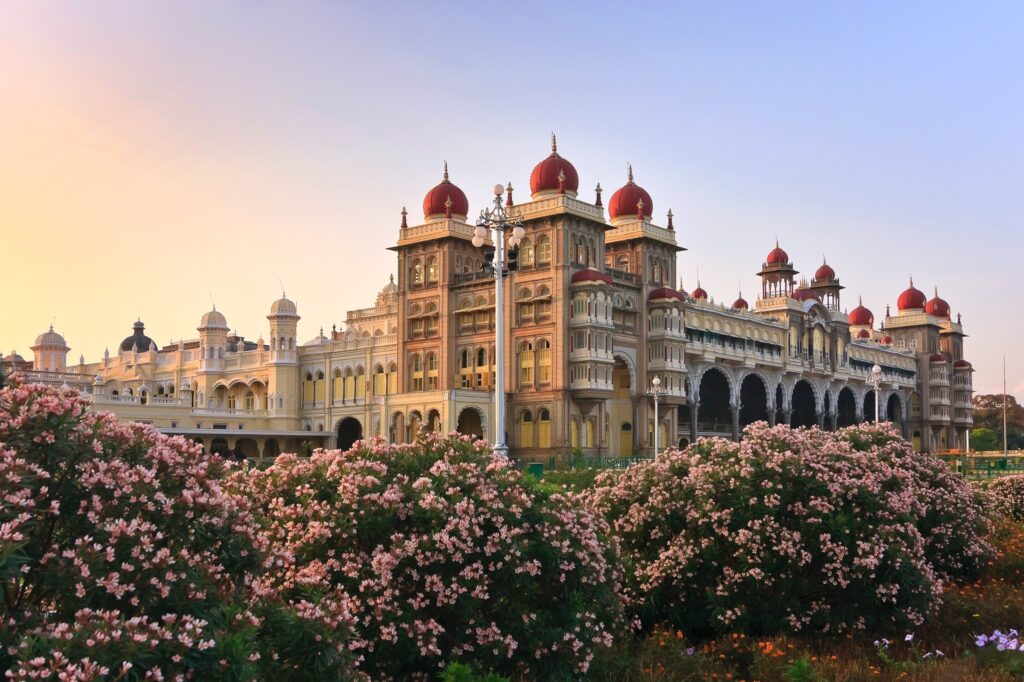
Mysore palace, Karnataka
Mysore Palace, also known as the Amba Vilas Palace, is one of the most famous and beautiful palaces in India, located in Mysuru (Mysore), Karnataka. It was the royal residence of the Wadiyar dynasty, who ruled the Kingdom of Mysore for many centuries. The current palace was built in 1912 after the old wooden palace was destroyed by fire. Designed by British architect Henry Irwin, it showcases a stunning blend of Hindu, Mughal, Rajput, and Gothic architectural styles, making it a true masterpiece. The palace is known for its grand domes, arches, and tall towers, with a breathtaking façade that looks especially magical when illuminated with nearly 100,000 lights during Sundays and festivals. Inside, the palace is equally magnificent, with beautifully carved doors, stained-glass windows, and richly decorated halls. The Durbar Hall, used for royal meetings and ceremonies, and the Kalyana Mantapa (wedding hall) with its gorgeous stained-glass ceiling are highlights of the palace’s interior. Mysore Palace plays a central role during the world-famous Mysore Dasara festival, when it becomes the heart of grand celebrations, including a royal procession with decorated elephants, music, and dance. The palace also houses a museum that displays royal jewelry, costumes, paintings, and weapons, offering a glimpse into the royal lifestyle.
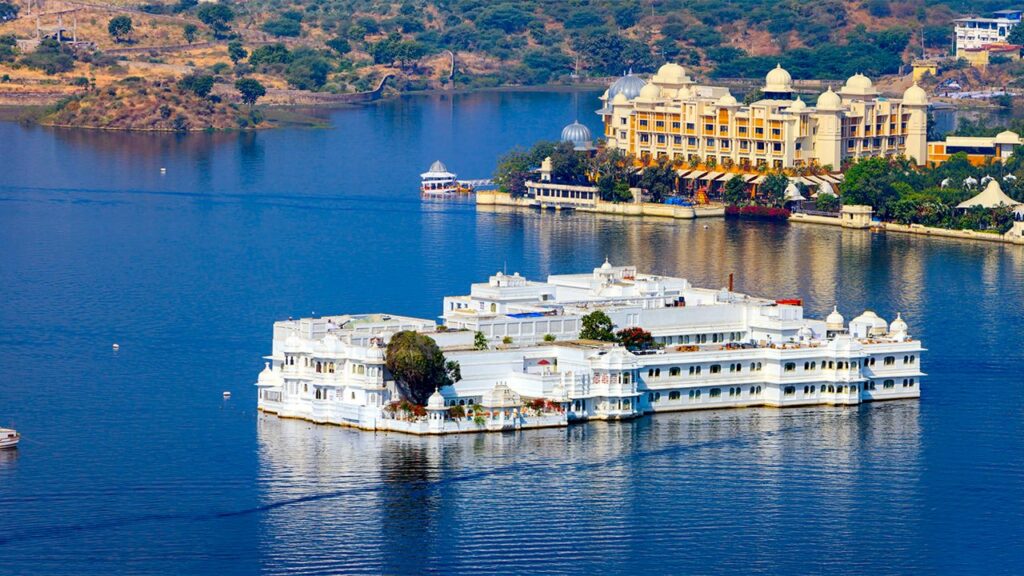
Lake palace, Jaipur
The Lake Palace, located in Udaipur, Rajasthan, is one of the most beautiful and romantic palaces in India, often called a “floating palace” because it appears to rise magically from the waters of Lake Pichola. Built in 1746 by Maharana Jagat Singh II, this stunning white marble palace was originally known as Jag Niwas and served as a royal summer retreat for the kings of the Mewar dynasty. Surrounded entirely by water, the palace provided privacy, security, and a cool environment during the hot Rajasthani summers. The Lake Palace is famous for its exquisite architecture, with carved pillars, beautiful courtyards, fountains, and lush gardens that reflect the grandeur of Rajput royalty. The interiors are equally magnificent, featuring delicate glasswork, hand-painted walls, and royal furniture. In the past, it was also a royal venue for important gatherings and ceremonies. Today, the Lake Palace has been transformed into a luxury heritage hotel, managed by the Taj Group, offering guests a unique experience of royal living. It is one of the top wedding and honeymoon destinations in the world. Visitors can reach the palace only by boat, adding to its charm and exclusivity.
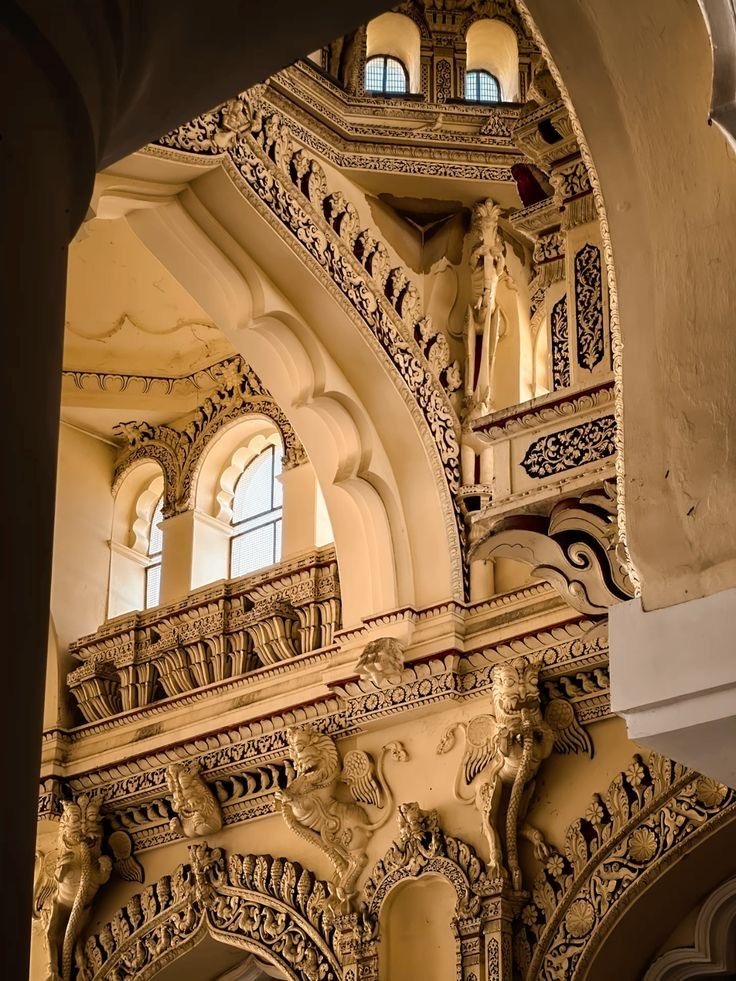
Thirumalai Naickar palace
Thirumalai Naickar Palace is one of the finest examples of Indo-Saracenic architecture, built in 1636 CE by King Thirumalai Nayak of the Nayaka dynasty. The palace once covered a huge area, but only one-fourth of the original structure survives today. Its most striking feature is the massive courtyard surrounded by tall, majestic pillars, some rising up to 82 feet in height. The palace blends Dravidian, Islamic, and European design elements, giving it a unique and elegant appearance. The Swarga Vilasam (Celestial Pavilion) is the highlight, with its grand dome and richly decorated interiors. The stucco work on the arches and ceilings displays the artistic excellence of the Nayak period. The palace also has an impressive throne room, where the king held court and royal ceremonies. Although many parts were damaged over time, the restored sections help visitors imagine its former glory. In the evenings, a sound-and-light show explains the history of Madurai and the rule of King Thirumalai Nayak. Today, the palace stands as a proud symbol of Madurai’s royal heritage and is a must-visit attraction for tourists.